How Trading Tickets Turned My Grow a Garden Struggles into Rare Harvests
Master Grow a Garden’s trading system to swap rare crops like Glowing Moonfruit, using Trading Tickets and value safeguards for successful trades.
I still remember the day I stood in my little Roblox garden, staring at a patch of Common Sunflowers and wondering if I'd ever get my hands on a Glowing Moonfruit. For months, Grow a Garden had been my cozy escape—a place where I could plant seeds, raise pixelated pets, and dream of filling my collection with the rarest crops. But the grind was real. Every visit to the seed stall felt like a lottery. Sure, the shops occasionally restocked higher-value seeds, but relying on luck alone? That was like waiting for a shooting star to land in your backyard.
I'd refresh the stall, dash away, come back, and sigh at the same boring Tomato and Wheat seeds. My friend once joked, "You'll get a Dragonfruit seed when the servers shut down!" It stung because deep down, I knew he was right. The path to rarity in Grow a Garden was paved with patience I simply didn't have. Then Patch 1.17.0 dropped with a feature that changed everything: the Trading system. Finally, we weren't just hoping—we could actually swap for those elusive wishlist items. But was I ready to dive in? Of course I was, though the journey turned out to be more twisty than a Beanpole vine.
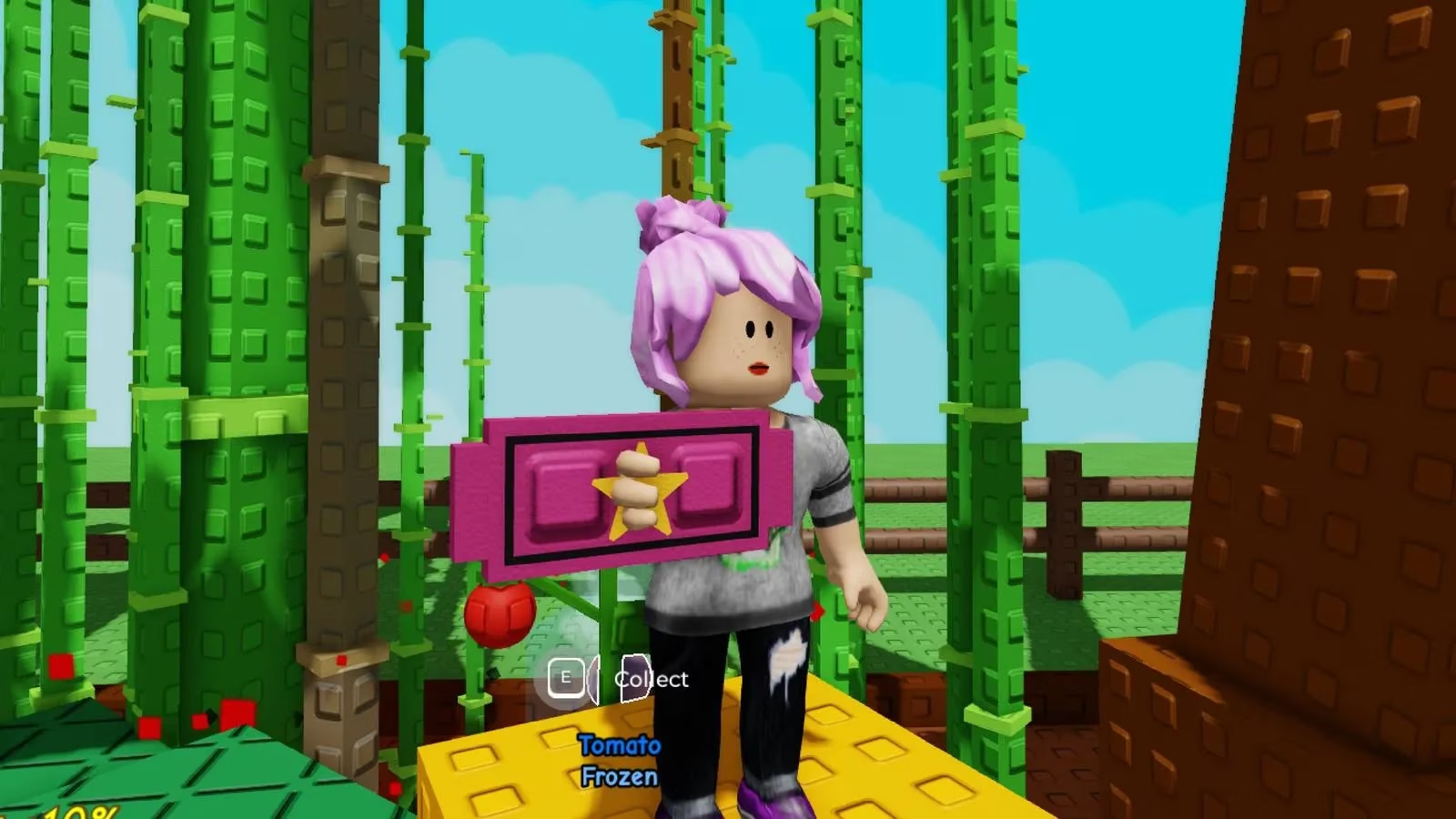
My first step into the trading world felt like preparing for a treasure hunt. I learned that to initiate a trade I needed two things: an account older than seven days (thankfully I was an old-timer) and a Trading Ticket. The Ticket, priced at a whopping 100,000 Sheckles or 19 Robux, sat in the Gear shop on the opposite side of the map, usually with a stock of just 1–3. It was an investment, but I scraped together the Sheckles by selling my modest harvests, heart pounding as I purchased the golden slip.
Holding that ticket, I approached a player who had a shimmering Crystal Cabbage, something I'd only ever seen in screenshots. When I came close, the trade request option popped up. My hands trembled as I clicked. The other player accepted, and suddenly we were face-to-face in the trading screen. I loaded my side with a couple of rare pets and a few thousand Sheckles. Then I saw the magic: at the top, the total Sheckle value of both offers was displayed clearly. I could hover over any item to see its individual worth. This was my safeguard. Without it, I might have traded a Chroma Butterfly for a seemingly fancy but low-value Common Daisy.
We moved items around, and a five-second timer started ticking every time something changed. Both of us had to re-accept. It was a little dance, but I appreciated the safety net. Still, my first trade ended in a cancel. The other player backed out last second—maybe they got cold feet. Here's the kicker: because the trade was fully initiated, I lost my Trading Ticket. That hurt. I had to go back to the Gear shop, shell out another 100k, and try again. Lesson one: the ticket vanishes the moment the trade window opens, so make sure your partner is committed.
But why does the system work this way? It prevents tire-kickers from wasting everyone's time, but for a new trader, it feels punishing. Did I let that discourage me? Not a chance. I studied the value hovers, checked prices at the stalls, and joined a friendly server where players shared what they thought fair trades looked like. By 2026, the community has developed an unofficial rulebook: a Rainbow Tusked Beetle is worth X, a Glowing Moonfruit is Y. But the in-game Sheckle display remains the ultimate truth-teller.
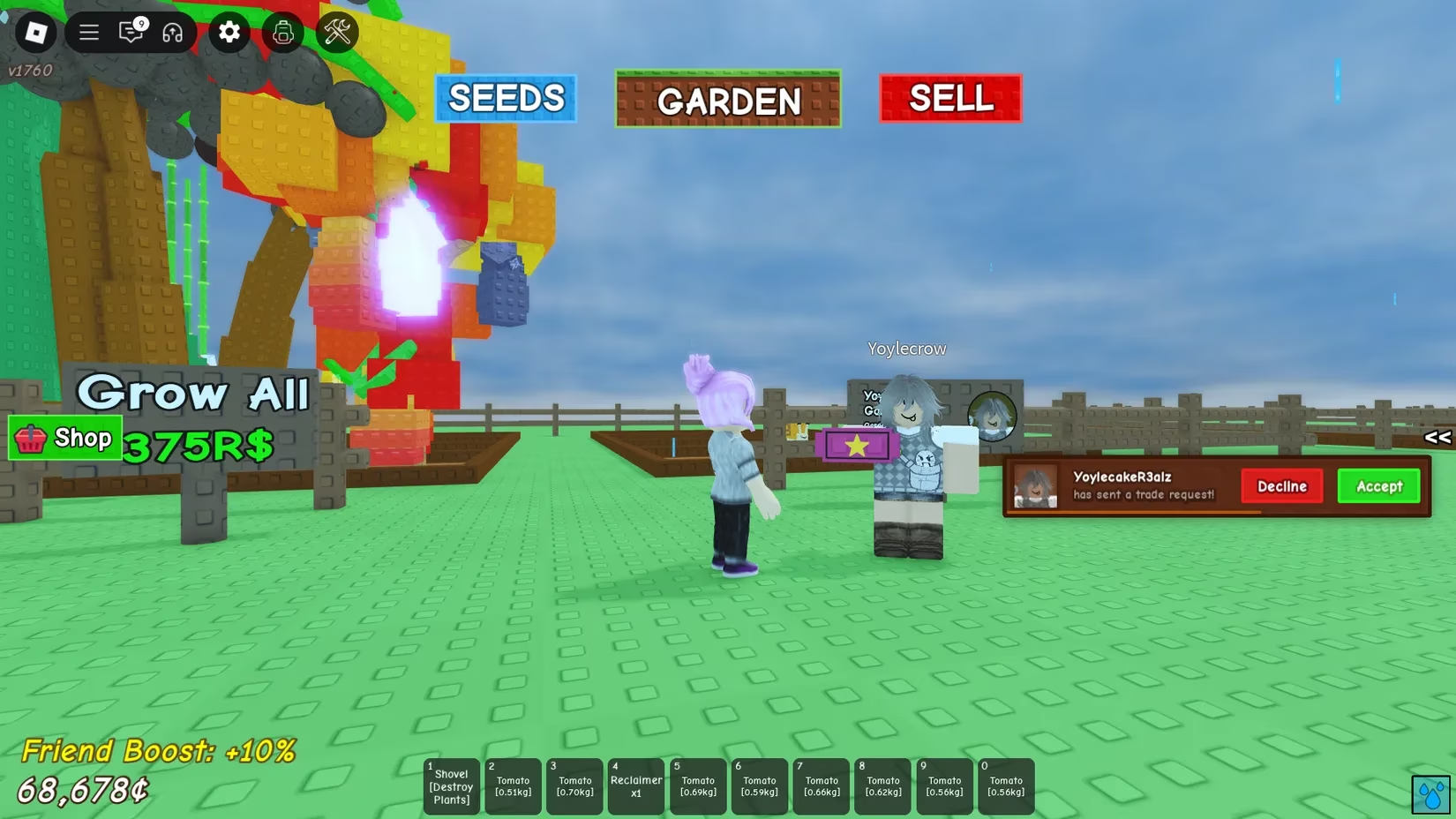
One evening, I finally landed my dream crop. A veteran player offered a Sunbloom Dahlia for my double-spawned Blizzard Fox and 2M Sheckles. I hovered over every item; the values lined up. The timer ticked, we both accepted, and the trade completed with a satisfying ding. I ran to my garden, planted that Dahlia seed, and watched it sprout under the virtual moonlight. I felt like a true horticultural tycoon.
But let's talk about the dark side. Before trading was added, players used the gifting system to exchange items informally. That was a scammer's paradise—no way to ensure the other guy held up their end. With official trading, we have failsafes to reduce unfair trades. Still, you need to stay sharp. I once nearly fell for a switch scam: someone put in a prized Golden Watermelon, then quickly swapped it for a regular Watermelon right before I accepted. The five-second timer saved me because I noticed the change and refused to re-accept. "Always watch the item icons!" I now scream at my monitor whenever a friend rushes a trade.
Trading Tickets also have a peculiar rule: only the person requesting the trade needs one. If the recipient declines, the ticket isn't consumed. So I've learned to politely ask before shoving a trade request in someone's face. A quick “trade?” in chat and a wave of my ticket saves Sheckles and bad vibes. Plus, you can type shorthand values like "9M" for 9,000,000 Sheckles to keep your offer clean.
By mid-2026, I've become a regular at the Gear shop, buying tickets in bulk when I'm flush with cash. I've traded my way to a full set of elemental pets and a garden that makes visitors gasp. Has the system made the game too easy? Hardly. It's added a layer of strategy and social interaction that makes every harvest meaningful. I still plant seeds, still wait for shop restocks, but now I also have the power to turn my duplicates into treasures.
If you're still grinding alone, ask yourself: Are you content with Common Sunflowers forever? Trading isn't a gimmick—it's the heart of modern Grow a Garden, and once you understand the ticket's dance and the five-second waltz, you'll wonder how you ever played without it. Just remember: watch the values, trust the timer, and never trade away your favorite pet unless your heart truly sings at the offer. Now, if you'll excuse me, I have a Lunar Tiger Lily to hunt down. Anyone holding? Let's make a deal!
Recent analysis comes from PC Gamer, and it helps frame why Grow a Garden’s Patch 1.17.0 trading loop feels like more than a simple convenience feature: player-to-player economies thrive when friction (like ticket costs and accept timers) discourages spam while still enabling meaningful exchange. Seen through that lens, Trading Tickets function as a deliberate “cost-to-trade” gate that filters unserious requests, while the five-second re-accept timer and visible Sheckle valuations act as anti-scam UX patterns—turning the old gifting-era trust gamble into a more transparent marketplace where duplicates can be converted into targeted upgrades without removing the long-term grind.
Comments