Roblox Faces Texas Lawsuit Over Child Safety Allegations Amid Growing State Scrutiny
Roblox lawsuit and child safety are at the forefront as Texas files a major legal action, alleging the platform prioritizes profits over protecting its youngest users from predators and explicit content.
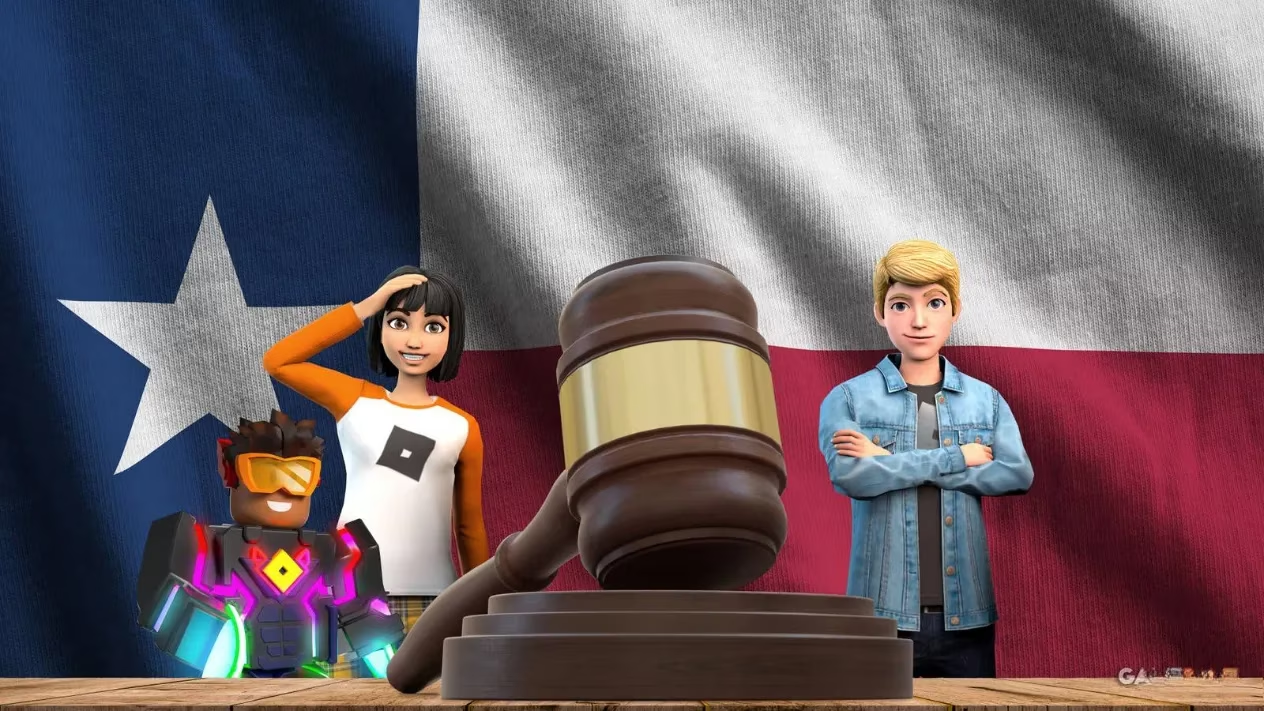
In a major legal escalation that continues a trend of increased regulatory pressure on the popular gaming platform, the state of Texas has filed a lawsuit against Roblox Corporation, alleging the company has placed "pedophiles and profits" ahead of the safety of its youngest users. Texas Attorney General Ken Paxton, in a fiery statement, described Roblox as a "breeding ground for predators" that has "flagrantly" ignored both state and federal online-safety laws while misleading parents about the actual dangers present in its vast digital ecosystem. This legal action, filed on November 6th, 2025, represents the latest in a series of state-level challenges to the platform's child protection policies, following similar lawsuits from Louisiana and Kentucky and a subpoena from Florida earlier in the year. The core of the state's argument hinges on consumer protection, claiming Roblox overstates its safety safeguards to parents, creating a false sense of security while children are allegedly exposed to sexually explicit content, exploitation, and grooming.
The Anatomy of the Allegations: A Pattern of State Action
Texas is not going it alone in this fight. The lawsuit filed by AG Paxton is part of a broader, coordinated state-by-state offensive against Roblox's safety protocols that has been building momentum throughout 2025. The legal complaints from Louisiana, Kentucky, and now Texas share a common thread: they frame the issue not just as a negligence case, but as a deceptive trade practices and consumer protection violation. The states argue that Roblox's marketing and communications to parents paint a picture of a walled garden, while the reality inside the platform is far more perilous. As one social media commentator noted in the wake of the Texas filing, "It's like selling a car with airbags that don't inflate—you're selling safety that isn't there." The civil lawsuits filed by private individuals add another layer of pressure, creating a perfect storm of legal jeopardy for the company.
Roblox's Defense: Dismissing "Sensationalized Claims"
In response to the Texas lawsuit, Roblox Corporation has struck a familiar chord, expressing "disappointment" and labeling the complaint as driven by "misrepresentations and sensationalized claims." A company spokesperson reiterated Roblox's commitment to child safety, stating they share the Attorney General's concerns and are continuously investing in platform safety. This language is virtually identical to the response issued after the Louisiana lawsuit in August, suggesting a prepared, standardized corporate defense strategy. The company points to its recent safety initiatives as evidence of its proactive stance:
-
Disabling Unrated Experiences: In a significant move, Roblox has disabled all unrated user-generated experiences on its platform, forcing content through a rating system.
-
Age Rating Standardization: The launch of an initiative to create consistent, standardized age ratings across its entire game ecosystem.
-
Enhanced Verification & Controls: Previous introductions of stricter age verification mechanisms and various messaging restrictions between users of different ages.
-
Robust Reporting Systems: Continued investment in more powerful tools for users to report harmful content and behavior.
Roblox's position is that its safety practices are "continually evolving," implying that the lawsuits are attacking a moving target and perhaps an outdated perception of the platform.
The Bigger Picture: A Watershed Moment for Online Safety?
The outcome of the Texas case, alongside the others, could have ramifications far beyond Roblox's corporate offices. Legal and industry observers suggest this could be a watershed moment for how child-focused digital platforms operate. If Attorney General Paxton secures significant concessions or a favorable settlement from Roblox, those changes would almost certainly be implemented platform-wide across the United States. It's simply not practical, from a business or technical standpoint, for a global platform to maintain a patchwork of different safety policies state-by-state. A win for Texas could effectively set a new national standard for in-game moderation and parental disclosures.
Furthermore, the intense regulatory spotlight on Roblox is seen by many as a bellwether for the entire tech industry. The platform's unique position—a UGC (User-Generated Content) powerhouse used primarily by children—has made it the canary in the coal mine for online child safety regulation. Critics argue that Roblox's approach to moderation, which has historically relied heavily on automated systems and community reporting, has left it uniquely vulnerable to allegations of negligence. The current wave of lawsuits may well be paving the way for broader, stricter internet safety legislation that could impact social media, gaming, and metaverse platforms alike. As one analyst put it, "When the going gets tough, the tough get regulation—and Roblox is in the eye of the storm."
The stakes, therefore, are incredibly high. For Texas and the other states, it's about holding a corporate giant accountable and protecting children from digital harm. For Roblox, it's about defending its business model and reputation. And for the wider tech world, the results of these legal battles in 2025 and 2026 could redefine the rules of the road for online safety for a generation to come. The final chapter of this saga is yet to be written, but the pressure on Roblox to prove its safety bona fides has never been greater.
Comments